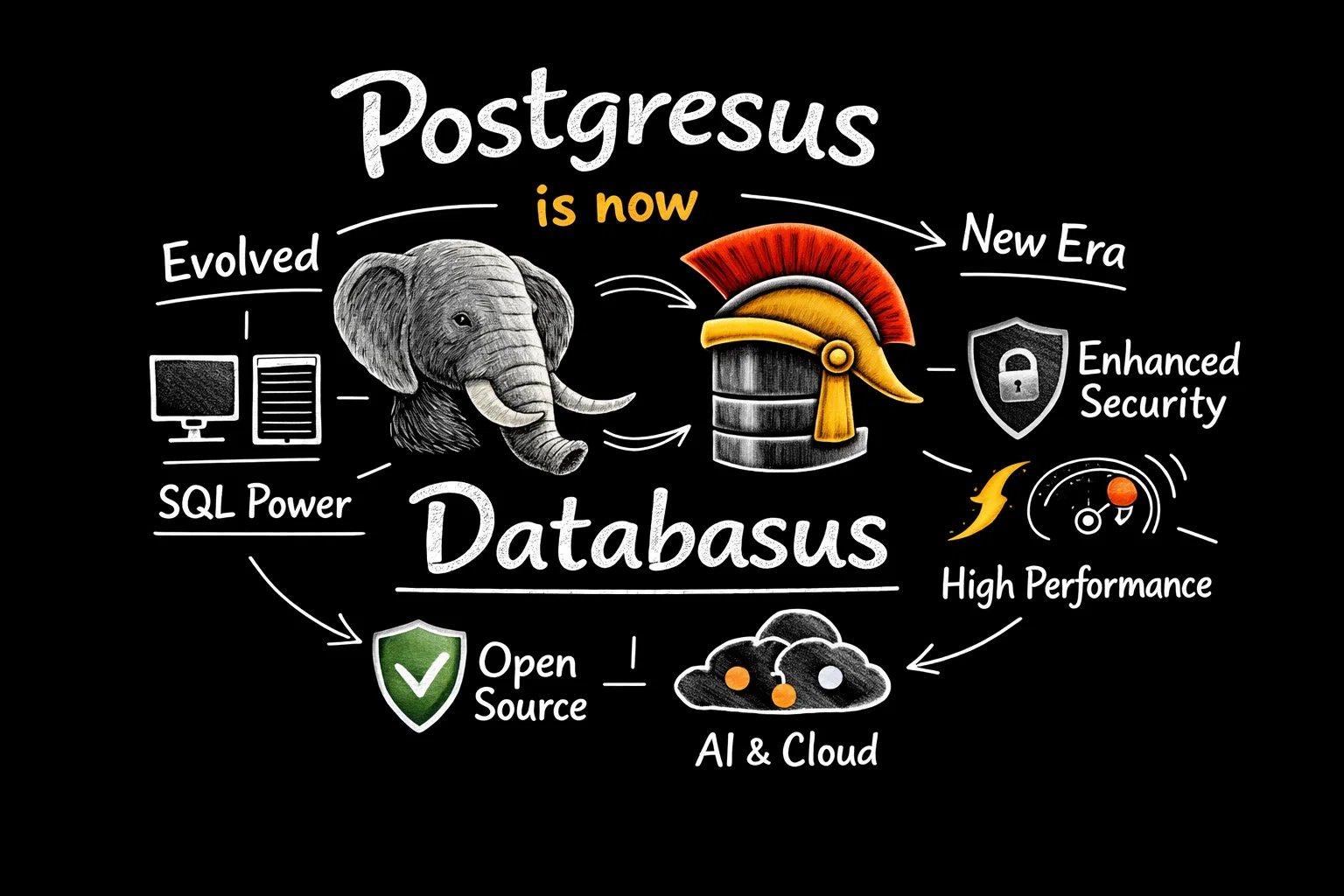
At first glance, Postgresus changing its name to Databasus looks like a routine rebrand. A small project grows, adds features, and updates its name to match. Nothing unusual.
But this rename actually signals something more interesting: a quiet shift from “a PostgreSQL helper tool” to “a general-purpose database backup system.”
And that shift reflects a broader pattern we’re seeing across the database tooling ecosystem.
Table of Contents
A Tool That Outgrew Its Own Name
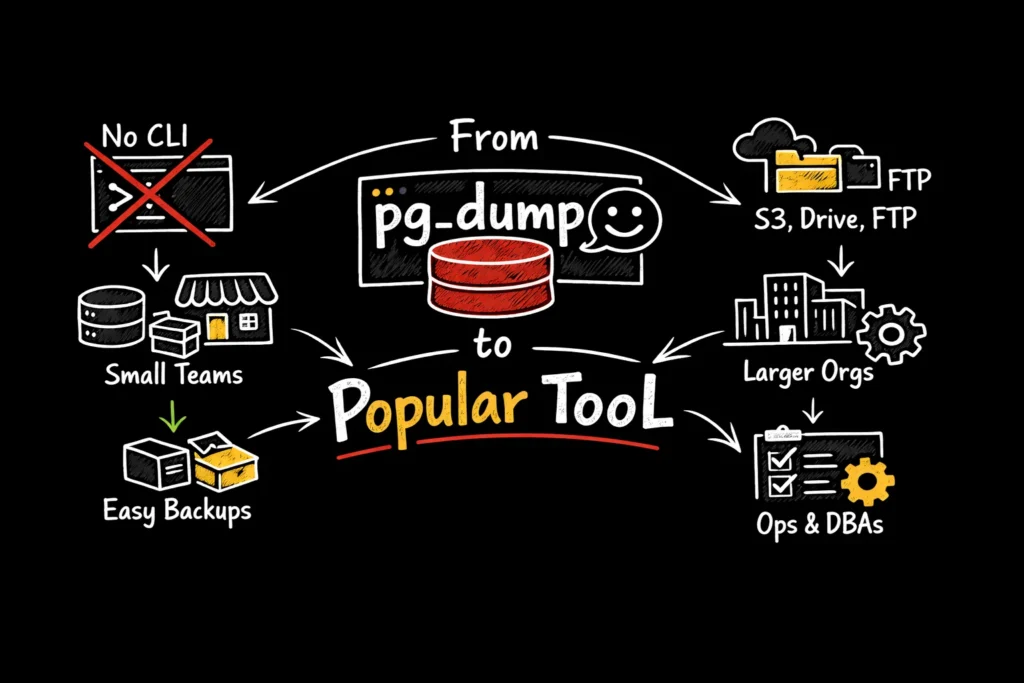
Postgresus began with a modest and very practical goal: put a friendly, self-hosted UI on top of pg_dump.
For many developers and small teams, it solved a real pain point. You got:
- PostgreSQL backups without living in the CLI
- Support for common storage targets like S3, Google Drive, and FTP
- A setup that worked well for small to mid-sized deployments
It wasn’t trying to be a platform. It was convenience software — and that’s precisely why it spread.
Over time, adoption snowballed. What started as a niche UI wrapper became something tens of thousands of users now rely on daily, including DBAs, DevOps teams, and larger organizations with real operational requirements.
At that point, the original name started to work against the project.
When “Postgres” Becomes a Limitation
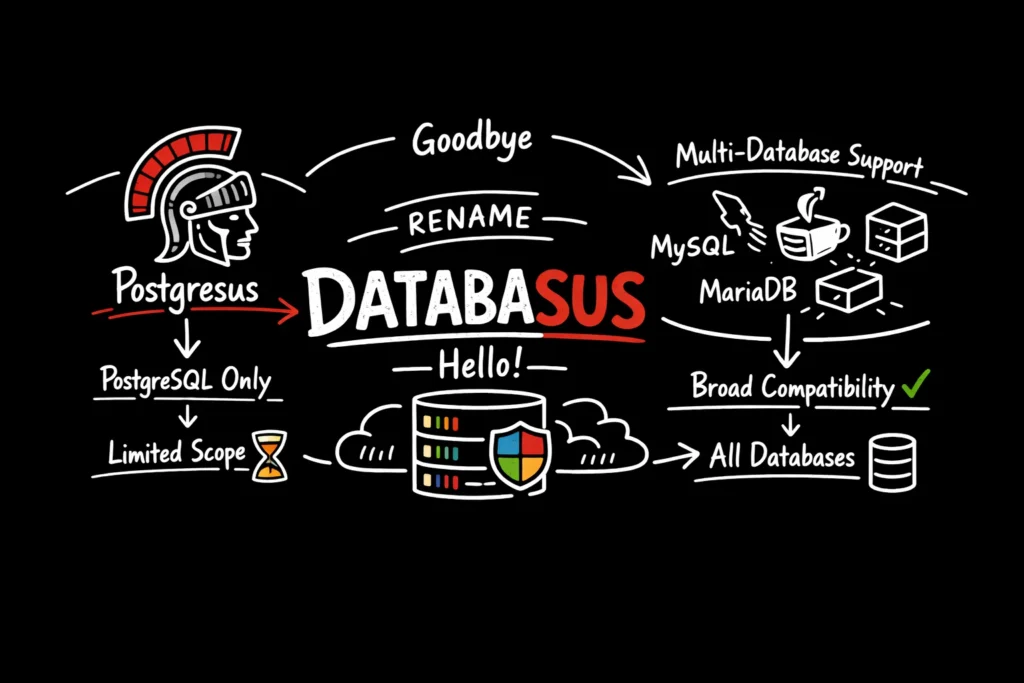
The problem wasn’t PostgreSQL itself. PostgreSQL remains the best-supported and most optimized database in the project.
The problem was perception.
See also: Mastering the Linux Command Line — Your Complete Free Training Guide
By the time Postgresus added support for MySQL, MariaDB, and MongoDB, the name no longer reflected reality. New users encountering the project would reasonably assume it was PostgreSQL-only, even though it had already crossed that boundary.
In other words, the name described the project’s past, not its present.
Renaming it to Databasus is an explicit statement: this is no longer just a PostgreSQL companion tool. It’s becoming a database-agnostic backup management system.
The Trademark Detail Matters More Than It Sounds
There’s also a less glamorous but very real reason behind the change.
“Postgres” is a registered trademark of PostgreSQL Inc. As long as the project stayed small and tightly scoped, that was easy to overlook. But as usage grew and the tool moved closer to being infrastructure software used by enterprises, trademark ambiguity became a liability.
This rename removes that risk entirely and gives the project room to grow without legal friction — a common inflection point for open source tools that cross from hobbyist adoption into serious production use.
What This Means for Users
For existing users, almost nothing changes operationally. PostgreSQL remains the primary focus, and the project continues to optimize deeply for it.
For new users, however, the signal is clearer:
- This tool is not tied to a single database engine
- Multi-database environments are a first-class concern
- More engines are likely coming
That makes Databasus less of a “nice UI for pg_dump” and more of a long-term backup strategy candidate.