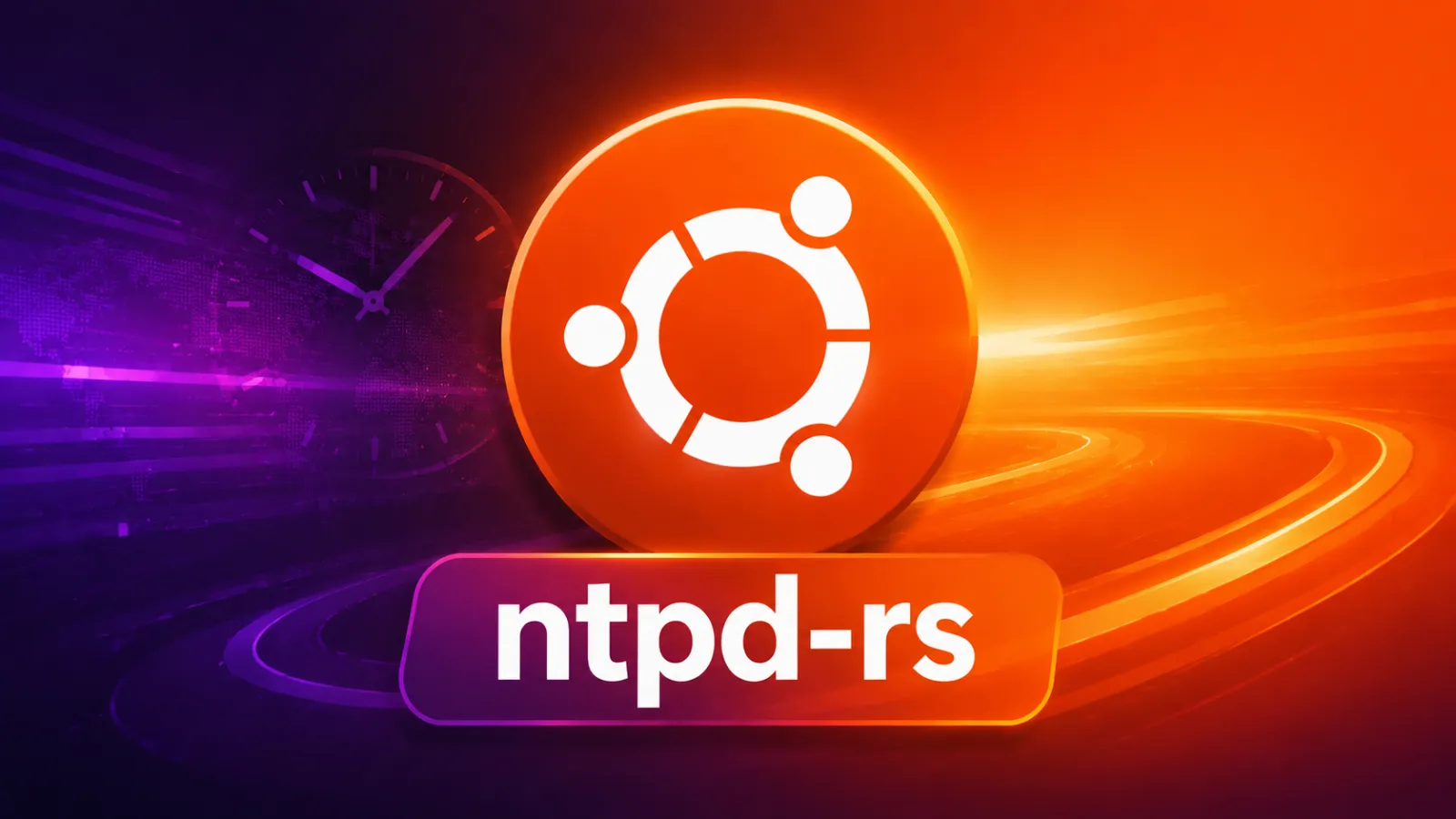
Canonical wants ntpd-rs, a memory-safe Rust rewrite of the Network Time Protocol, to become Ubuntu’s default time synchronization client and server. To push that goal along, Canonical has become a Gold Sponsor of the Trifecta Tech Foundation — the non-profit behind ntpd-rs — committing €40,000 a year to fund its memory-safe software work.
Table of Contents
The Roadmap
Canonical’s plan is staged rather than sudden:
| Release | What happens |
|---|---|
| Ubuntu 26.10 (October 2026) | ntpd-rs available for testing |
| Ubuntu 27.04 | ntpd-rs becomes the default time sync client and server |
| Eventually | Replaces chrony, linuxptp, and gpsd for time-syncing use cases |
That last point comes from Jon Seager, Ubuntu VP of Engineering, who has laid out ntpd-rs as a single Rust-based replacement for several long-standing C tools.
What Actually Changes (and What Doesn’t)
Your Ubuntu machine keeps its clock accurate by checking in with time servers over the internet using NTP. That doesn’t change — the goal is still simply to keep time in sync. What changes is the daemon doing the work: swapping a C implementation for a memory-safe Rust one.
This follows Ubuntu’s 25.10 time-sync overhaul, which replaced systemd-timesyncd with Chrony and added Network Time Security (NTS) to authenticate time servers. The ntpd-rs move is driven by the same security motive — but instead of layering protections on top, it replaces the daemon itself. Since an NTP service parses untrusted data from the network, Rust’s memory-safety guarantees (famed, and by some accounts overhyped) are especially valuable here.
Why Fund the Foundation
The €40,000 annual sponsorship helps the Trifecta Tech Foundation ensure the long-term security and reliability of its memory-safe projects. Chair Erik Jonkers says the money supports continued work on ntpd-rs and its surrounding pieces — including AppArmor rules.
This isn’t a first date. Canonical already co-sponsored sudo-rs, the Rust-based sudo replacement that became the system default in Ubuntu 25.10 and carried into the 26.04 LTS release in April. Seager says Canonical is “excited to deepen our already productive relationship with the Trifecta Tech Foundation to make these transitions viable for the wider ecosystem.”
The Takeaway
Like the sudo-rs switch before it, the move to ntpd-rs will be invisible in day-to-day use — your clock will just keep ticking. But it’s another concrete step in Ubuntu’s broader “oxidising” effort: methodically replacing foundational C utilities with memory-safe Rust ones, and putting real money behind the upstream projects that make it possible. Whether or not you think Rust’s safety benefits are overstated, Canonical clearly considers them worth both the effort and the expense.