
Table of Contents
Demystifying 0.0.0.0: The Most Misunderstood IP Address in Networking
If you’ve ever built a web server, configured Docker, or spun up a simple API in Node.js or Python, you’ve almost certainly seen it in your terminal: 0.0.0.0.
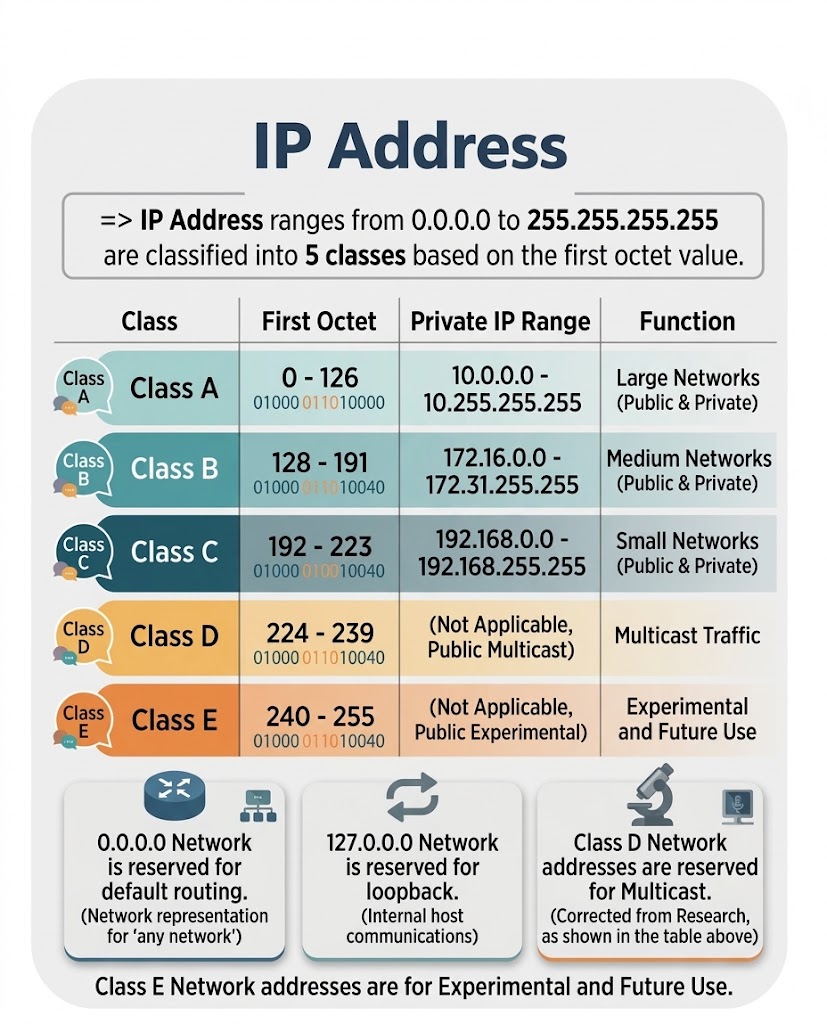
For many developers starting out, this string of four zeroes carries a bit of mystery:
- Is it a real IP address of a real computer somewhere?
- How does it differ from good old
127.0.0.1(localhost)? - Why does binding your server to
0.0.0.0suddenly let other devices connect whenlocalhostfails?
Let’s demystify network engineering’s favorite wildcard without getting lost in technical jargon.
1. What Does 0.0.0.0 Actually Mean?
In official IPv4 specifications (RFC 1122), 0.0.0.0 is designated as a non-routable reserved address. It does not belong to a specific computer, phone, or server on the internet.
Depending on the context, 0.0.0.0 translates to three main concepts: “no specific address,” “any address,” or “all network interfaces on this local machine.”
Here is how it behaves across three common real-world scenarios:
Scenario 1: Server Binding — “Accept Traffic From Anywhere”
When you start a web server on your machine, you have to tell the operating system which network interface to listen on for incoming connections.
- If you bind to
127.0.0.1:8080: Your server only listens to the loopback interface. It will only accept connections coming from inside your own computer. A teammate sitting next to you on the same Wi-Fi network won’t be able to reach it. - If you bind to
0.0.0.0:8080: You are telling your OS: “Listen for traffic arriving on EVERY network interface this machine has (Wi-Fi, Ethernet, VPN, Loopback). If it’s addressed to port 8080, let it through!”
Scenario 2: Default Gateway (0.0.0.0/0) — “The Catch-All Route”
In routing tables for routers and computers, 0.0.0.0/0 represents the Default Route.
When your computer tries to send traffic to an external website (like Medium or Google), it checks its internal routing table. If there isn’t a specific path listed for that destination, your computer says: “I don’t know where this goes, so send it to the catch-all route (0.0.0.0/0) — aka my router.”
Scenario 3: DHCP Discovery — “I Don’t Have an Identity Yet”
When a device connects to a network for the first time, it doesn’t have an IP address yet. It sends a broadcast packet out onto the network asking a DHCP server for an IP assignment. Because the device doesn’t own a valid IP address at that split second, it puts 0.0.0.0 as its temporary source address.
See also: Mastering the Linux Command Line — Your Complete Free Training Guide
2. Side-by-Side: 0.0.0.0 vs. 127.0.0.1
It’s easy to confuse these two special addresses. Here is how they compare directly:
| Dimension | 127.0.0.1 (Localhost) | 0.0.0.0 |
| Plain English | “Only me, inside this machine” | “Every network entry point on this machine” |
| External Access | Strict NO. No external device on your network can connect. | YES. Anyone on your local network (or public internet) can reach it. |
| Primary Use Case | Local development, isolated testing, private IPC. | Production deployment, exposing dev servers to LAN. |
| Valid Target Destination? | Yes! You can type [http://127.0.0.1](http://127.0.0.1) in your browser. | No! Most operating systems block using it as a target client address. |
3. Two Common Mistakes to Avoid
Pitfall 1: Trying to Navigate to [http://0.0.0.0](http://0.0.0.0) in a Browser
When your terminal prints Server listening at [http://0.0.0.0:3000](http://0.0.0.0:3000), new developers often copy-paste that exact URL into Chrome—and get a connection error (especially on Windows).
- The Fix:
0.0.0.0is an instruction for the server, not a target destination for a client. To test your server locally, navigate to[http://127.0.0.1:3000](http://127.0.0.1:3000)orhttp://localhost:3000.
Pitfall 2: Accidentally Exposing Dev Work to Public Wi-Fi
If you are coding in a public coffee shop and bind a sensitive local database or unauthenticated API to 0.0.0.0, anyone connected to that same open Wi-Fi network can discover your local IP address and query your open port.
- Security Rule of Thumb: When doing purely local development, default to
127.0.0.1. Only switch to0.0.0.0when you genuinely want outside devices on your network to reach your service.
Summary
0.0.0.0 isn’t a physical destination—it’s a master key for network listening and routing.
Understanding the difference between binding to a private loopback address (127.0.0.1) and opening up all interfaces (0.0.0.0) is one of the foundational steps toward mastering backend deployment and network security.