Setting up a new environment often requires installing specific tools to meet your project goals. You might find yourself needing to install a web server like Apache to host a website, or a network scanner like Nmap to audit your system’s security. Without the right software, your Ubuntu instance is just a minimalist base; installing the correct packages is what transforms it into a functional workstation or production server.
Ubuntu provides several powerful built-in mechanisms to manage software without requiring external downloads from untrusted sites. Whether you prefer the standard APT utility for traditional packages, the modern Snap format for self-contained apps, or manual .deb installations for specialized software, the process is designed to be secure and efficient. By mastering these methods, you can ensure your system remains up-to-date and stable while following Linux server security best practices.
Table of Contents
Key Takeaways: Software Installation in Ubuntu
- APT (Advanced Package Tool) → The standard command-line tool for managing Debian-based packages. It automatically handles dependencies for you.
- Package Index → A local database of available software that must be updated before installing new tools.
- Snap Packages → A newer, portable software format that bundles all necessary dependencies into a single package, ensuring they work across different Linux versions.
- Sudo Privileges → Administrative rights are mandatory for installing or removing software to prevent unauthorized changes to the system.
- Repositories → Centralized online archives where Ubuntu stores and maintains verified software packages.
Method 1: Installing via APT (The Recommended Way)
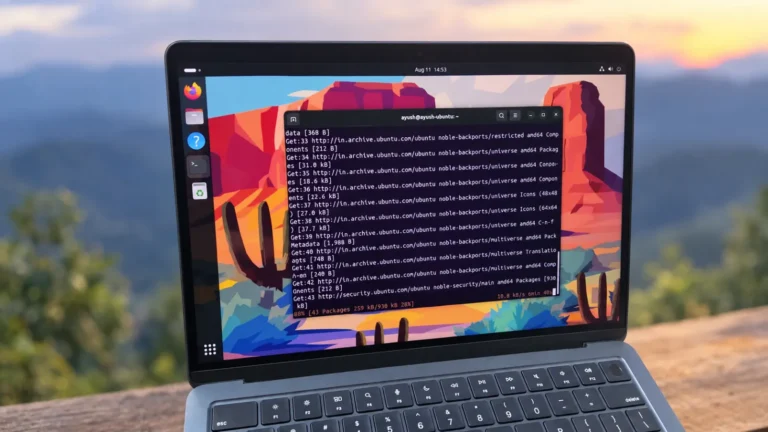
The Advanced Packaging Tool (APT) is the primary way to manage software on Ubuntu. It communicates with official repositories to find, download, and install the latest versions of your tools.
1. Update the Package List Before installing anything, you must sync your local index with the repositories: sudo apt update
2. Install the Package To install a specific tool, such as the nmap network scanner, use the install command: sudo apt install nmap
3. Verify the Installation You can check if a package is correctly installed by viewing its details: apt show nmap
Method 2: Using Snaps for Portable Apps
Snaps are self-contained applications that run in a sandboxed environment. They are excellent for software that requires specific dependency versions not found in the standard repositories.
To install a snap, use the following syntax: sudo snap install <package-name>
Snaps are highly recommended for cloud tools and modern developer applications because they are easy to update and roll back if issues occur.
Method 3: Installing Manual .deb Files with dpkg
Sometimes, software is provided as a standalone .deb file from a vendor’s website. While APT is preferred, you can install these manually using the dpkg utility.
See also: Mastering the Linux Command Line — Your Complete Free Training Guide
Command: sudo dpkg -i path/to/package.deb
Important Note: Unlike APT, dpkg does not always resolve dependencies automatically. If the installation fails due to missing files, you may need to run sudo apt install -f to repair the broken links.
Method 4: Group Installations with Tasksel
If you need to set up a complete environment (like a LAMP stack or a Mail Server) all at once, tasksel is the most efficient tool. It allows you to install bundles of related packages with a single command.
Command: sudo tasksel install lamp-server
Step-by-Step Process: Installing the Apache Web Server
Follow these steps to safely install and verify a standard production package like Apache2 on your system:
- Open your terminal and verify you have administrative access by understanding the Linux sudo command.
- Update your repository index to ensure you get the newest version:
sudo apt update. - Search for the package to confirm its exact name:
apt search apache2. - Execute the installation:
sudo apt install apache2. - Confirm the prompt: Type Y when asked “Do you want to continue?”.
- Verify disk usage: Once finished, you can check file size in Linux for the newly installed binaries or logs.
Summary Tables
| Installation Tool | Best For… | Dependency Handling |
|---|---|---|
| APT | Standard system software | Automatic |
| Snap | Portable/Modern apps | Self-contained |
| Dpkg | Manual .deb files | Manual |
| Tasksel | Full software stacks | Automatic |
| APT Command | Action |
|---|---|
update | Refreshes software list |
install | Downloads and sets up package |
remove | Deletes package but keeps config |
purge | Deletes package and all config |
search | Finds software by keyword |
FAQs
Why do I need to run ‘apt update’ before every installation? The “update” command doesn’t install new software; it updates your local list of what software is available. Without it, your system might try to download an old version that no longer exists in the APT repositories.
What is the difference between ‘apt remove’ and ‘apt purge’? remove uninstalls the software binaries but leaves your configuration files on the disk. purge removes everything, including your custom settings, which is useful for a completely fresh start.
Can I install multiple packages at once? Yes. You can list multiple package names separated by spaces: sudo apt install package1 package2 package3.